


A Complete, Actionable Guide for Businesses and Marketers
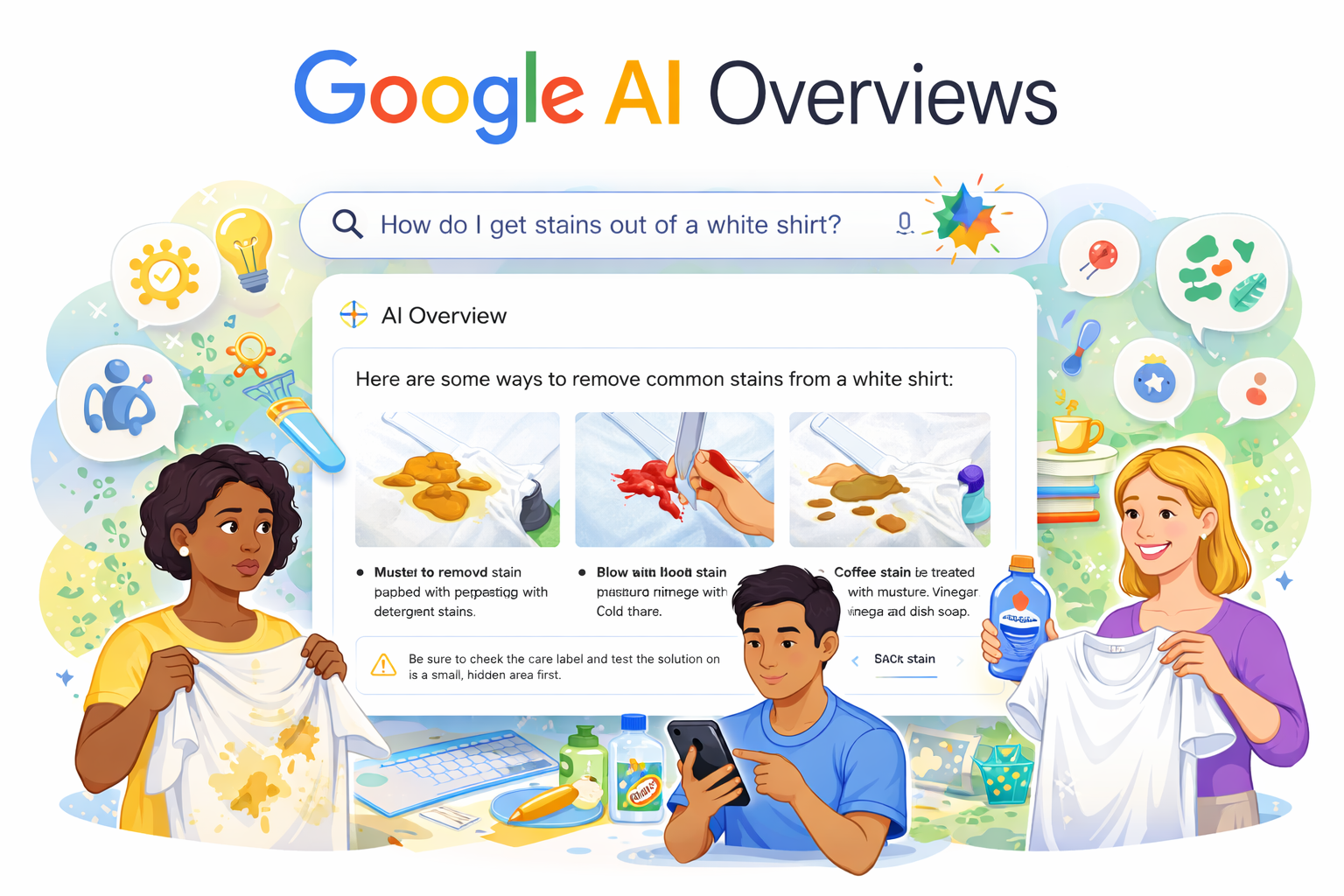
Google Search has evolved. In 2026, traditional blue links are no longer the only goal. Google’s AI Overviews now summarize answers directly at the top of search results, pulling information from high-quality, well-structured sources.
If your content is not optimized for AI-driven summaries, you are missing significant visibility.
This guide explains exactly how to rank in Google’s AI Overviews in 2026, with practical strategies you can implement immediately.
What Are Google AI Overviews?
Google AI Overviews are AI-generated summaries that appear at the top of search results for certain queries. They:
Provide direct answers to user questions
Summarize multiple trusted sources
Highlight key information clearly
Reduce the need for users to click multiple links
To rank in AI Overviews, your content must be:
Accurate
Structured
Clear
Authoritative
Directly aligned with search intent
Why Ranking in AI Overviews Matters
Appearing in AI Overviews can:
Increase brand visibility
Build authority
Improve click-through rates
Capture high-intent traffic
Position your brand as a trusted source
In many cases, being referenced in AI summaries delivers stronger credibility than traditional rankings alone.
1. Understand Search Intent at a Deeper Level
AI Overviews prioritize content that precisely answers user intent.
There are four primary types of search intent:
Informational – “What is technical SEO?”
Transactional – “Best CRM software for small business”
Navigational – Brand-specific searches
Commercial Investigation – “WordPress vs custom development”
To rank in AI Overviews:
Match the intent exactly
Avoid vague introductions
Provide direct, structured answers early in the article
Pro Tip: Start articles with a concise definition or summary paragraph answering the main query directly.
2. Use Clear Question-and-Answer Formatting
AI systems favor structured content.
Include:
H2 and H3 question-based headings
Direct answers under each heading
Concise paragraphs (40–80 words per block)
Bullet points and numbered lists
Example structure:
What Is On-Page SEO?
On-page SEO refers to optimizing individual web pages to improve rankings and user experience. It includes content optimization, meta tags, internal linking, and technical improvements.
Clear formatting improves AI extraction accuracy.
3. Write Authoritative, Comprehensive Content
Thin content rarely appears in AI Overviews.
Your content should:
Cover the topic in depth
Answer related sub-questions
Provide actionable insights
Include definitions, examples, and explanations
Long-form content (1,500–2,500+ words) tends to perform better when it remains clear and well-organized.
Depth signals expertise.
4. Optimize for Semantic Search
Google’s AI understands context, not just keywords.
Instead of repeating the same keyword, include related concepts.
For example, if targeting:
“How to Rank on Google AI Overviews”
Also include related terms like:
AI search optimization
Structured content
Featured snippets
E-E-A-T principles
Search intent alignment
Schema markup
Topical authority
This improves contextual relevance.
5. Strengthen E-E-A-T Signals
Google prioritizes:
Experience
Expertise
Authoritativeness
Trustworthiness
To improve E-E-A-T:
Publish accurate information
Avoid exaggerated claims
Include credible references where appropriate
Maintain consistent topical authority
Demonstrate industry knowledge
Content should reflect real expertise rather than generic writing.
6. Optimize for Featured Snippets (They Influence AI Overviews)
AI Overviews often pull from pages already optimized for featured snippets.
To improve snippet eligibility:
Provide 40–60 word direct answers
Use bullet lists for processes
Add numbered steps
Define terms clearly
Example:
Steps to Optimize for AI Overviews
Identify search intent
Provide direct answers
Use structured headings
Implement schema markup
Build topical authority
Concise, structured information increases extraction probability.
7. Implement Structured Data (Schema Markup)
Schema helps search engines understand your content.
Important schema types include:
FAQ schema
How-to schema
Article schema
Organization schema
Structured data improves clarity and can increase inclusion in AI-driven results.
8. Improve Technical SEO Foundations
Even the best content won’t rank if your technical SEO is weak.
Ensure:
Fast loading speed
Mobile optimization
HTTPS security
Clean URL structure
Proper internal linking
Crawlable architecture
AI systems prioritize technically sound websites.
9. Build Topical Authority
Google favors websites that demonstrate expertise in a specific niche.
Instead of publishing random topics:
Create content clusters
Interlink related articles
Cover subtopics comprehensively
Update content regularly
Example:
If you publish about SEO, also cover:
Technical SEO
On-page SEO
Link building
Local SEO
SEO analytics
Core Web Vitals
Topical consistency increases authority signals.
10. Keep Content Updated
AI Overviews prioritize fresh and relevant information.
Regularly:
Update statistics
Refresh outdated examples
Improve clarity
Expand sections
Content decay reduces visibility.
11. Write in a Clear, Neutral, Informative Tone
AI systems prefer:
Factual content
Clear explanations
Logical structure
Neutral tone
Avoid:
Excessive promotion
Overuse of sales language
Keyword stuffing
Informative content performs better than aggressive marketing copy.
12. Answer Follow-Up Questions Within the Same Article
AI Overviews aim to satisfy the entire query.
Include related questions such as:
How long does it take to rank in AI Overviews?
What types of content perform best?
Do backlinks matter for AI rankings?
Is schema required?
This increases semantic depth.
13. Improve User Engagement Signals
AI-driven systems consider behavioral signals.
Improve:
Time on page
Scroll depth
Engagement
Reduced bounce rate
How?
Clear formatting
Logical progression
Actionable insights
Avoid unnecessary fluff
Better user engagement reinforces ranking strength.
14. Optimize for Conversational Queries
In 2026, more searches are conversational.
Instead of optimizing only for:
“SEO strategies”
Also include:
“What are the best SEO strategies in 2026?”
“How do I improve SEO rankings fast?”
Conversational phrasing aligns with AI-generated summaries.
15. Create Definitive, Evergreen Resources
AI Overviews prefer reliable, stable information.
Evergreen content performs better than:
Trend-only posts
Short news updates
Thin opinion pieces
Focus on comprehensive guides and structured knowledge resources.
Common Mistakes to Avoid
Writing vague introductions without direct answers
Ignoring structure and headings
Overusing keywords unnaturally
Publishing shallow content
Neglecting technical SEO
Failing to update old articles
Ranking in AI Overviews requires intentional formatting and depth.
Example Structure That Performs Well
High-performing AI-optimized content often follows this flow:
Direct answer summary (40–60 words)
Clear definition
Detailed explanation
Step-by-step process
Common mistakes
Best practices
FAQ section
Final actionable takeaway
Structure improves machine readability.
Final Checklist: Ranking in Google AI Overviews
✔ Provide direct answers early
✔ Use question-based headings
✔ Keep paragraphs concise
✔ Add lists and bullet points
✔ Cover the topic comprehensively
✔ Implement structured data
✔ Strengthen technical SEO
✔ Build topical authority
✔ Update content regularly
✔ Maintain clear, neutral tone
Final Thoughts
Ranking in Google’s AI Overviews in 2026 requires more than traditional SEO. It requires:
Clarity
Structure
Depth
Authority
Technical strength
AI systems prioritize content that truly satisfies user intent and presents information in a structured, digestible format.
If your goal is visibility, authority, and long-term organic growth, optimizing specifically for AI-driven search experiences is no longer optional — it’s essential.


